Is Health News Still Relevant? 31 Facts About Information in the Digital Age
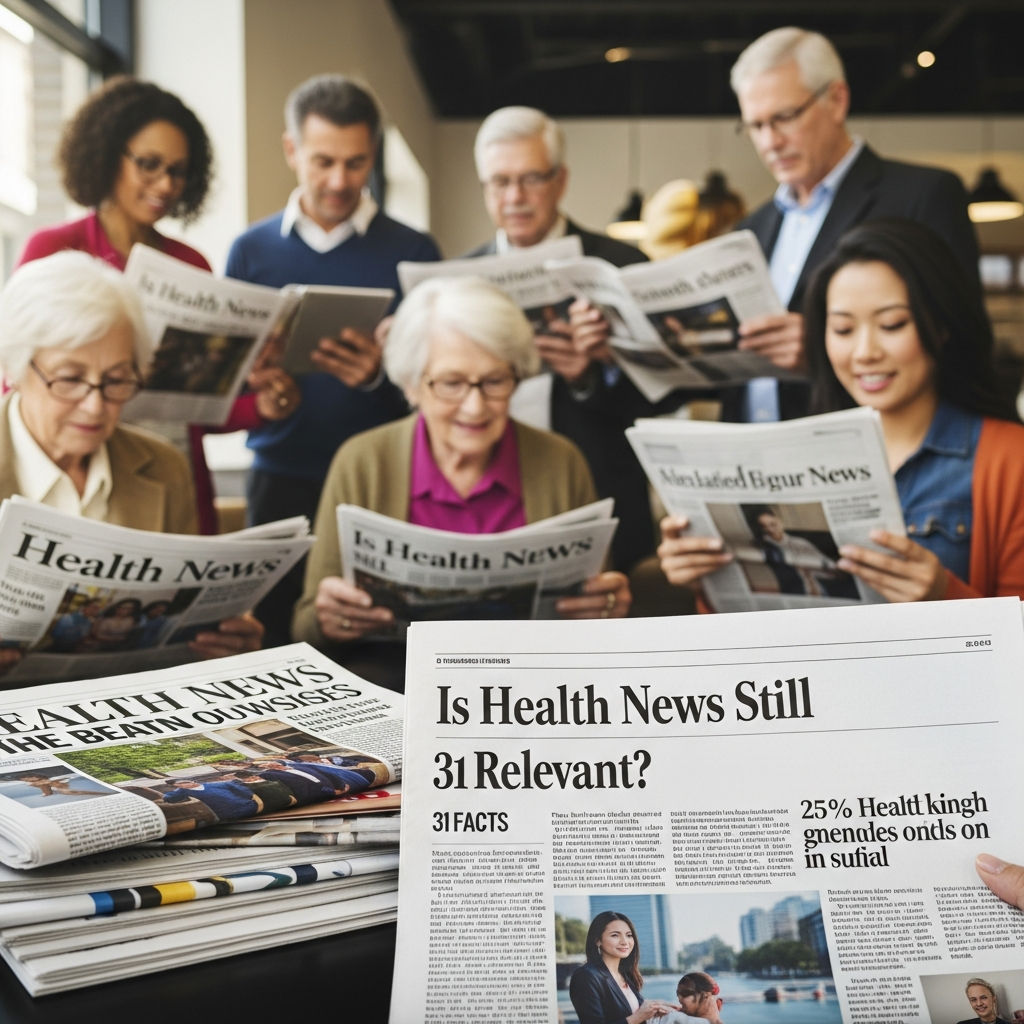
In an era where a 15-second TikTok video can go viral by claiming a “miracle cure” and AI chatbots can synthesize medical advice in seconds, a critical question arises: Is traditional health news still relevant? For decades, health journalism served as the primary bridge between complex laboratory findings and the general public. Today, that bridge is crowded with influencers, algorithms, and a relentless 24-hour news cycle.
The relevance of health news hasn’t diminished; rather, its role has shifted from being a mere provider of information to a vital filter for truth. As we navigate an “infodemic,” the ability to discern evidence-based reporting from speculative “wellness” trends has become a survival skill. To understand the current landscape, we must look at how health news impacts our behavior, our policy, and our physical well-being.
The Shifting Landscape of Medical Journalism
Historically, health news was delivered via nightly broadcasts or the “Science” section of a Sunday newspaper. These stories were often vetted by dedicated medical correspondents. Today, the democratization of information means anyone with an internet connection can publish health content. While this increases accessibility, it also dilutes quality. However, the core mission of health news—to inform the public about risks, breakthroughs, and systemic issues—remains a cornerstone of a functioning society.
31 Facts About the Relevance and Impact of Health News
- 1. The “Infodemic” Reality: The World Health Organization (WHO) coined the term “infodemic” to describe the overabundance of information—some accurate and some not—that makes it hard for people to find trustworthy sources during a health crisis.
- 2. High Search Volume: Approximately 7% of all Google searches are health-related, translating to over 1 billion health questions asked every single day.
- 3. The Power of Peer Review: Quality health news acts as a translator for peer-reviewed studies, making high-level science accessible to those without a medical degree.
- 4. Impact on Vaccine Uptake: Studies show that consistent, factual reporting on vaccine safety directly correlates with higher immunization rates in local communities.
- 5. The “Angelina Jolie Effect”: When high-profile health news breaks—such as Jolie’s op-ed about her BRCA1 mutation—testing for genetic breast cancer risks increased by 64% in the following weeks.
- 6. Preventing “Cyberchondria”: Reliable health news helps mitigate “cyberchondria,” the escalation of anxiety resulting from searching medical symptoms online and finding worst-case scenarios.
- 7. Accountability for Big Pharma: Investigative health journalism is often the only force holding pharmaceutical companies accountable for drug pricing and clinical trial transparency.
- 8. Navigating Nutrition Fatigue: With conflicting studies on coffee, red wine, and keto diets, health news provides the necessary context to explain why scientific consensus changes over time.
- 9. Mental Health Destigmatization: The surge in reporting on depression, anxiety, and neurodiversity has been cited as a primary driver in reducing social stigma over the last decade.
- 10. Tracking Emerging Pathogens: Health news outlets serve as an early warning system for outbreaks like Ebola, Zika, and avian flu, often reaching the public faster than government pamphlets.
- 11. Health Literacy Statistics: Only 12% of U.S. adults have proficient health literacy. Traditional health news fills this gap by simplifying complex concepts.
- 12. The Rise of “Medical Influencers”: Doctors on social media have become a new form of “news,” blending entertainment with clinical advice to reach younger demographics.
- 13. Policy Influence: Legislators frequently cite high-impact health reporting when drafting bills related to public safety, such as vaping bans or lead pipe replacements.
- 14. The Danger of Clickbait: A significant challenge to relevance is “clickbait” headlines that exaggerate the findings of small animal studies, leading to public distrust.
- 15. AI-Generated Misinformation: The rise of AI means health “news” can now be generated at scale without human oversight, making human-vetted journalism more valuable than ever.
- 16. Crisis Management: During natural disasters, health news provides essential information on water safety, mold prevention, and emergency care.
- 17. The Economic Factor: Healthcare accounts for nearly 18% of the US GDP. News regarding healthcare costs and insurance changes is vital for consumer financial planning.
- 18. Longevity and Biohacking: The growing interest in “longevity science” relies heavily on health news to separate legitimate breakthroughs (like senolytics) from expensive shams.
- 19. Addressing Health Inequities: Health news plays a crucial role in highlighting how medical outcomes differ based on race, gender, and socioeconomic status.
- 20. The Nocebo Effect: Negative or alarmist health news can actually cause people to experience physical symptoms, a phenomenon known as the “nocebo effect.”
- 21. Telehealth Awareness: The rapid adoption of telehealth during the 2020s was largely facilitated by news outlets explaining how to use the technology.
- 22. Environmental Health Links: Modern health news increasingly connects climate change to respiratory issues and the spread of vector-borne diseases.
- 23. Wearable Tech Data: As more people use smartwatches, health news helps users interpret the data (like HRV or SpO2) that their devices provide.
- 24. The Decline of Local Health Desks: Many local newspapers have cut their health reporters, leading to a “news desert” where regional health issues go unreported.
- 25. Newsletter Resurgence: Curated health newsletters (like those from the Mayo Clinic or STAT News) have seen a massive spike in subscribers seeking a “quiet” way to consume news.
- 26. Regulation of Supplements: Since the FDA does not regulate supplements for safety and efficacy in the same way as drugs, health news is the primary watchdog for this $150 billion industry.
- 27. The Role of Podcasts: Long-form health podcasts have become a primary news source, allowing for deep dives into topics that a 500-word article cannot cover.
- 28. Clinical Trial Recruitment: Many patients find life-saving clinical trials through news stories highlighting experimental treatments.
- 29. Global Connectivity: Health news allows a breakthrough in a lab in Switzerland to be known by a patient in rural Australia within hours.
- 30. Combating Loneliness: Recent news coverage of the “loneliness epidemic” has redefined social isolation as a clinical health risk, leading to new community interventions.
- 31. The Future of Personalized Medicine: As we move toward DNA-based treatments, health news will be essential in educating the public on the ethics and mechanics of gene editing.
The Challenge of Discerning Quality
While the relevance of health news is undeniable, the burden of discernment has shifted to the consumer. To remain relevant, news must adhere to the “Hierarchy of Evidence.” A meta-analysis of multiple human trials is far more newsworthy than a single study performed on mice. Reliable health news will always cite its sources, interview independent experts (not just the study authors), and acknowledge the limitations of the data.
When health news fails, it usually falls into the trap of “sensationalism.” This occurs when a journalist prioritizes a shocking headline over clinical accuracy. However, when health news succeeds, it saves lives by encouraging a screening, preventing an accidental poisoning, or pressuring a corporation to remove a carcinogen from a consumer product.
How to Consume Health News Today
To ensure the health news you consume is relevant and accurate, consider the following strategy:
- Check the Source: Is the information coming from a reputable medical institution, a government agency, or a journalist with a history of science reporting?
- Look for Consensus: Does this “news” contradict everything else known about the topic? Extraordinary claims require extraordinary evidence.
- Identify the Funding: Good health journalism discloses if a study was funded by a company that stands to profit from the results.
- Beware of Absolute Language: Be skeptical of words like “cure,” “miracle,” or “guaranteed.” Science is a process of probability, not certainty.
Conclusion: The Enduring Value of Truth
Is health news still relevant? Absolutely. In fact, it is arguably the most important genre of journalism in the modern world. While we have more data than ever, we have less clarity. We are drowning in “what” but starving for “why.” Reliable health news provides that “why.” It contextualizes our symptoms, validates our mental health struggles, and monitors the systems that keep us alive.
As long as humans face illness, aging, and the desire for vitality, the need for a trusted messenger will exist. The medium may change from a printed broadsheet to a digital feed, but the value of accurate, ethically reported health news remains a fundamental pillar of public health and individual empowerment.