How to Master Health News in 32 Days: Your Roadmap to Medical Literacy
In an era of instant information, we are constantly bombarded with conflicting health advice. One day, caffeine is a miracle antioxidant; the next, it’s a cardiovascular risk. This “infodemic” makes it difficult to discern life-saving breakthroughs from predatory clickbait. Mastering health news isn’t just about reading more; it’s about developing a critical lens to filter noise from signal.
This comprehensive 32-day guide is designed to transform you from a passive consumer into a savvy health news expert. By the end of this month-long journey, you will understand how to vet sources, interpret clinical data, and apply health news to your personal wellness journey with confidence.
Phase 1: Days 1-8 – Building the Foundation of Health Literacy
The first week is about learning the “language” of health science. Without a grasp of basic terminology, even the most accurate news reports can be misleading.
Day 1-3: Understand the Hierarchy of Evidence
Not all studies are created equal. To master health news, you must recognize the “Pyramid of Evidence”:
- Meta-Analysis & Systematic Reviews: The gold standard. These look at all available research on a topic to find a consensus.
- Randomized Controlled Trials (RCTs): The best way to determine cause and effect.
- Observational Studies: These show correlations (patterns) but do not prove that one thing caused another.
- Animal/Cell Studies: Crucial for early research, but results rarely translate 1:1 to humans.
Day 4-6: Correlation vs. Causation
This is the most common pitfall in health reporting. If a headline says, “People who drink tea live longer,” it doesn’t mean tea *causes* longevity. It might mean tea drinkers also happen to exercise more or smoke less. Mastering this distinction is key to debunking sensationalist news.
Day 7-8: Sample Sizes and Significance
A study of ten people is a pilot; a study of ten thousand is a trend. Look for the “n” value (sample size). Additionally, learn what “statistical significance” means—it indicates that the results likely weren’t due to random chance, but it doesn’t always mean the effect is “clinically significant” or large enough to matter in real life.
Phase 2: Days 9-16 – Identifying Gold Standard Sources
Where you get your news is just as important as how you read it. This week, we curate a high-quality “information diet.”
Day 9-11: Moving Beyond Social Media
Social media algorithms prioritize engagement, not accuracy. To master health news, move your primary consumption to curated newsletters from reputable institutions. Start with the Harvard Health Blog, the Mayo Clinic News Network, and the Johns Hopkins Health Review.
Day 12-14: Navigating Peer-Reviewed Journals
Health journalists often summarize “pre-prints” (studies not yet reviewed by other experts). Aim to wait for peer-reviewed publications in prestigious journals like:
- The Lancet
- The New England Journal of Medicine (NEJM)
- JAMA (Journal of the American Medical Association)
- Nature Medicine
Day 15-16: Government and International Health Bodies
Learn to navigate the websites of the CDC (Centers for Disease Control), the NIH (National Institutes of Health), and the WHO (World Health Organization). These organizations provide the “consensus view,” which serves as a vital baseline when evaluating new, outlier claims.
Phase 3: Days 17-24 – Decoding the Data and Spotting Red Flags
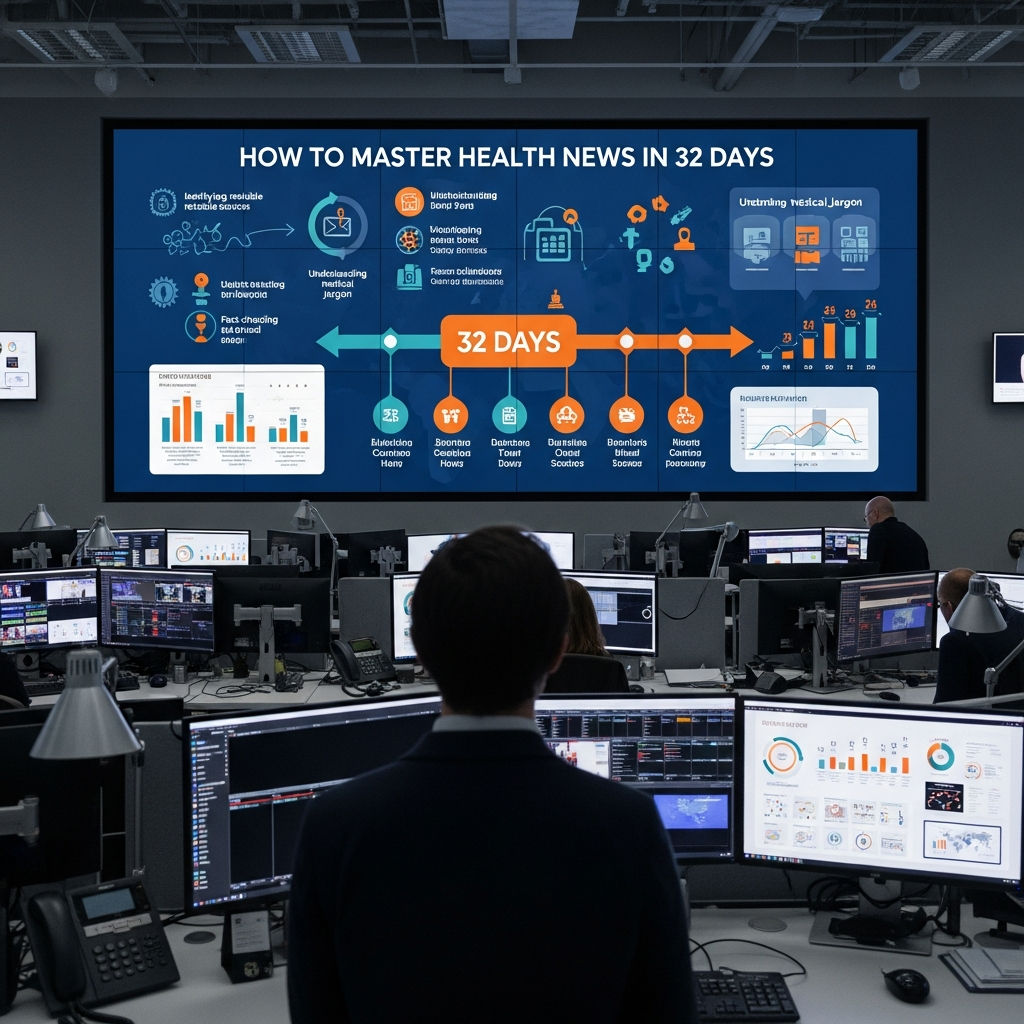
Now that you have your sources, it’s time to look under the hood of the articles themselves. This week focuses on the “critical appraisal” of health content.
Day 17-19: Absolute vs. Relative Risk
A headline might scream, “New Drug Increases Stroke Risk by 50%!” This is relative risk. However, if the absolute risk goes from 1 in 1,000 to 1.5 in 1,000, your actual danger remains extremely low. Always look for the absolute numbers to maintain perspective.
Day 20-21: Identifying Conflicts of Interest
Who funded the study? If a study claiming “Sugar has no impact on weight” was funded by a soda conglomerate, the results require extreme skepticism. Transparency is a hallmark of good health news; if the funding source isn’t disclosed, move on.
Day 22-24: The “Miracle Cure” Checklist
Use these red flags to spot “pseudo-health” news instantly:
- Does the article use “loaded” language like “miracle,” “secret,” or “breakthrough”?
- Is the author selling a supplement or course related to the news?
- Is the news based on a single, unpublished study?
- Does it promise to “cure” a complex, chronic condition overnight?
Phase 4: Days 25-32 – Practical Application and Long-term Mastery
In the final stretch, you will integrate these skills into your daily routine and learn how to discuss health news with professionals.
Day 25-27: Building Your Personalized RSS Feed
Use tools like Feedly or Google Scholar Alerts to track specific topics (e.g., “Type 2 Diabetes research” or “Longevity science”). By narrowing your focus, you become an expert in the niches that matter most to your personal health profile.
Day 28-30: Consulting the Experts
Health news should never replace medical advice. Learn to bring health news to your doctor effectively. Instead of saying, “I read that I should take this supplement,” try: “I saw a recent RCT in JAMA regarding this treatment; how does this data apply to my specific labs?”
Day 31: Fact-Checking the Fact-Checkers
Use sites like HealthNewsReview.org or Snopes’ health section to see how experts deconstruct viral health claims. This “meta-analysis” of health reporting will sharpen your own critical thinking skills.
Day 32: The Mastery Mindset
Finalize your commitment to “Slow News.” Mastery means acknowledging that science is a process, not a destination. It’s okay for recommendations to change as more data becomes available. Being a master of health news means being comfortable with the evolving nature of truth.
Conclusion: Empowerment Through Knowledge
Mastering health news in 32 days is a transformative process. You have moved from being overwhelmed by the 24-hour news cycle to being an informed advocate for your own health. By understanding the hierarchy of evidence, vetting your sources, and recognizing the nuances of statistical reporting, you can navigate the complex world of medical information with clarity.
Remember, the goal of health literacy isn’t to become a doctor—it’s to become a partner in your own healthcare. Stay curious, stay skeptical, and always look for the data behind the headline.