“`html
Top 5 Complete Tools for Health News Success: Mastering the Wellness Niche
In the digital age, health news is one of the most competitive and scrutinized niches on the internet. Whether you are a medical journalist, a wellness blogger, or a healthcare marketer, the stakes are high. Not only must your content be engaging and timely, but it must also adhere to the strict “Your Money or Your Life” (YMYL) standards set by search engines like Google. This means prioritizing Experience, Expertise, Authoritativeness, and Trustworthiness (E-E-A-T).
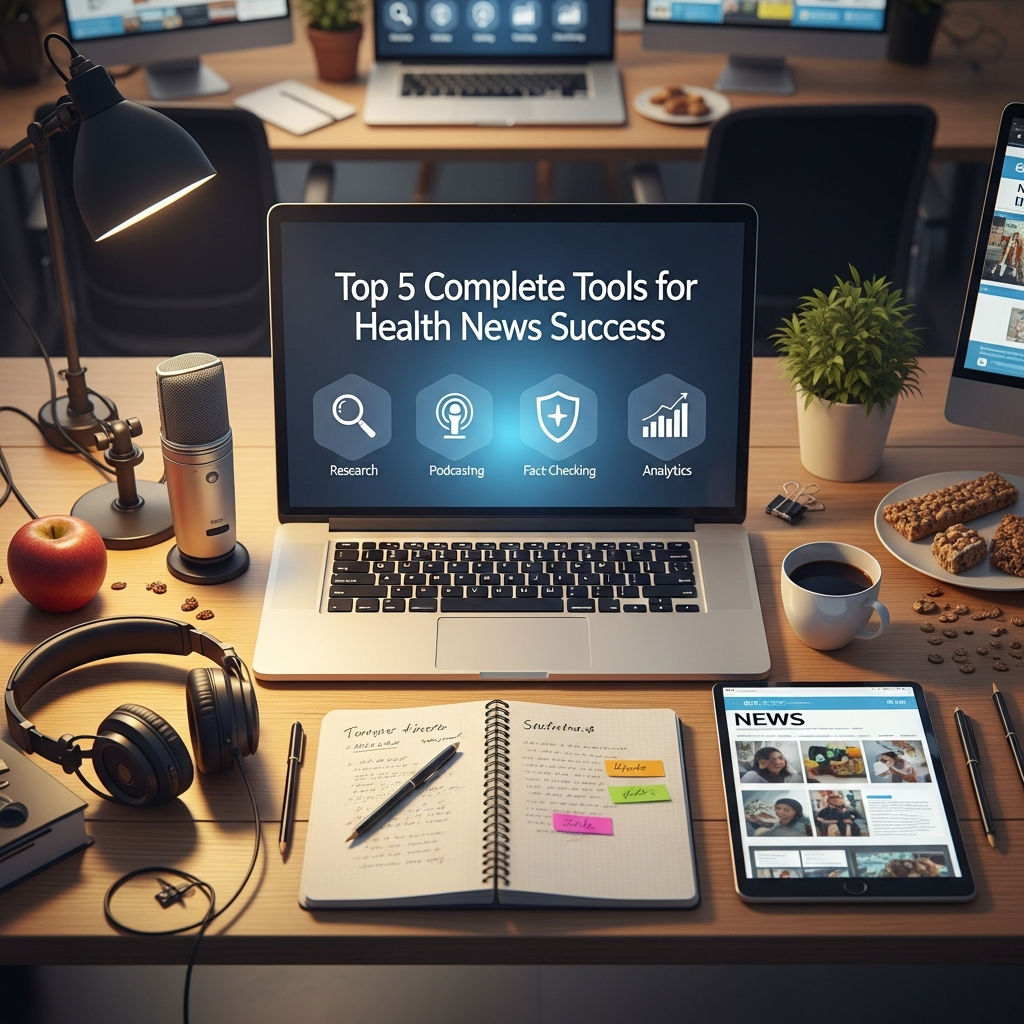
To succeed in health news, you cannot rely on intuition alone. You need a robust tech stack that helps you identify emerging trends, verify clinical data, optimize for search engines, and distribute content effectively. Below, we explore the top five complete tools designed to drive health news success in today’s demanding landscape.
1. Exploding Topics: Spotting Health Trends Before They Peak
Success in news is often about being first. However, in the health sector, being first requires more than just luck; it requires data. Exploding Topics is an essential tool for health news creators who want to identify “under the radar” wellness trends before they become mainstream.
- Early Trend Detection: The tool uses AI to scan millions of searches, conversations, and mentions to find topics growing in popularity.
- Niche Filtering: You can filter specifically for “Health,” “Fitness,” and “Medicine” to see what supplements, diets, or medical technologies are gaining traction.
- Strategic Advantage: By writing about a topic like “Ashwagandha benefits” or “Continuous Glucose Monitors” before the market is saturated, you gain a massive SEO advantage and establish early authority.
Using Exploding Topics allows you to move from being a reactive news outlet to a proactive trendsetter, ensuring your health news platform is always ahead of the curve.
2. PubMed and NCBI: The Gold Standard for Fact-Checking
In the world of health news, a single factual error can destroy your reputation and tank your SEO rankings. Google’s algorithms are specifically designed to demote health information that contradicts established scientific consensus. This is why PubMed (maintained by the National Center for Biotechnology Information) is a non-negotiable tool.
While not a traditional “marketing” tool, PubMed is the engine behind authoritative health content. It provides access to over 35 million citations for biomedical literature from MEDLINE, life science journals, and online books.
- Clinical Verification: Before publishing a claim about a new treatment, use PubMed to find peer-reviewed studies that support or refute it.
- Citing Sources: High-quality external links to .gov and .edu domains (like those found on PubMed) signal to search engines that your content is well-researched.
- Expert Insights: Identify leading researchers in specific medical fields to contact for quotes or interviews, further boosting your content’s E-E-A-T.
3. Semrush: Comprehensive SEO for YMYL Content
If you want your health news to be found, you need a powerhouse SEO tool. Semrush is widely considered the industry standard for keyword research, competitor analysis, and site audits. For health news success, Semrush offers specialized features that are invaluable.
How Semrush Elevates Health Portals:
- Keyword Magic Tool: Health queries often take the form of questions (e.g., “What are the symptoms of…”). Semrush helps you identify these long-tail “question” keywords that drive high-intent traffic.
- Topic Research: This feature allows you to input a seed topic and see a “mind map” of related headlines and questions people are asking, which is perfect for generating editorial calendars.
- SEO Writing Assistant: This plugin checks your content in real-time for readability and ensures you are targeting your chosen keywords naturally without “keyword stuffing,” which is vital for maintaining a professional medical tone.
Semrush also allows you to monitor your competitors’ “Health News” sections, seeing which of their articles are performing best so you can create even better, more comprehensive versions.
4. Canva: Simplifying Complex Medical Data
Health news often involves complex data, statistics, and anatomical explanations. A wall of text can be intimidating and may lead to high bounce rates. Canva has evolved into a complete tool for health communicators to visualize data and make news more digestible.
Visual storytelling is crucial for health news success because it increases social shares and improves user engagement metrics. Canva offers a suite of tools specifically useful for the health niche:
- Infographic Templates: Quickly turn a 20-page medical study into a 5-point summary infographic.
- Data Visualization: Import CSV files to create clean, professional charts showing health trends, such as the rise of a specific condition or the success rate of a new vaccine.
- Brand Consistency: Use the “Brand Kit” to ensure all medical diagrams and social posts use consistent colors and fonts, which builds professional trust with your audience.
Remember, an image that explains a medical process can often be more valuable to a reader than 500 words of description, making your site a go-to resource for clarity.
5. Feedly: The Ultimate News Aggregator and Monitoring Tool
To stay relevant, health news creators must monitor hundreds of sources daily—from the FDA and WHO to specialized medical journals and pharmaceutical press releases. Feedly is an AI-powered news aggregator that streamlines this overwhelming influx of information.
Feedly’s “Leo” AI assistant is particularly powerful for health news success. You can train the AI to filter out the noise and only show you articles regarding specific breakthroughs, regulatory approvals, or specific health sectors (like Telemedicine or Oncology).
- Centralized Intelligence: Stop visiting 50 different websites. View all your trusted medical sources in one dashboard.
- Collaboration: If you have a team of writers, you can use shared boards to flag stories that need immediate coverage.
- Competitive Intelligence: Track what other major health news outlets are reporting on in real-time to ensure you never miss a breaking story.
Best Practices for Health News SEO
While these tools provide the foundation, success in health news also requires a specific strategic approach. Here are three critical tips for using these tools effectively:
Prioritize Readability and Accessibility
Medical jargon can alienate readers. Use tools like the Hemingway Editor (often integrated with SEO tools) to ensure your news is written at an accessible grade level. If a reader cannot understand your health advice, they will leave, and your rankings will suffer.
The Importance of Author Bylines
In the health niche, *who* wrote the article matters as much as *what* was written. Ensure every piece of news has a clear author byline with a link to a bio highlighting their credentials. If the writer isn’t a medical professional, have the content “Medically Reviewed By” a doctor or certified expert, and state this clearly at the top of the page.
Regular Content Audits
Medical news changes. A study from 2018 might be debunked by 2024. Use your SEO tools (like Semrush or Ahrefs) to perform regular audits of your top-performing health articles. Update them with the latest findings to maintain your authority and search rankings.
Conclusion
Achieving success in the health news niche is a marathon, not a sprint. It requires a delicate balance of speed, accuracy, and technical SEO. By leveraging Exploding Topics for discovery, PubMed for verification, Semrush for search optimization, Canva for visualization, and Feedly for organization, you create a powerhouse workflow that satisfies both human readers and search engine algorithms.
In an era of misinformation, the world needs high-quality, evidence-based health news. With these five tools in your arsenal, you are well-equipped to become a leading voice in the wellness and medical community.
“`