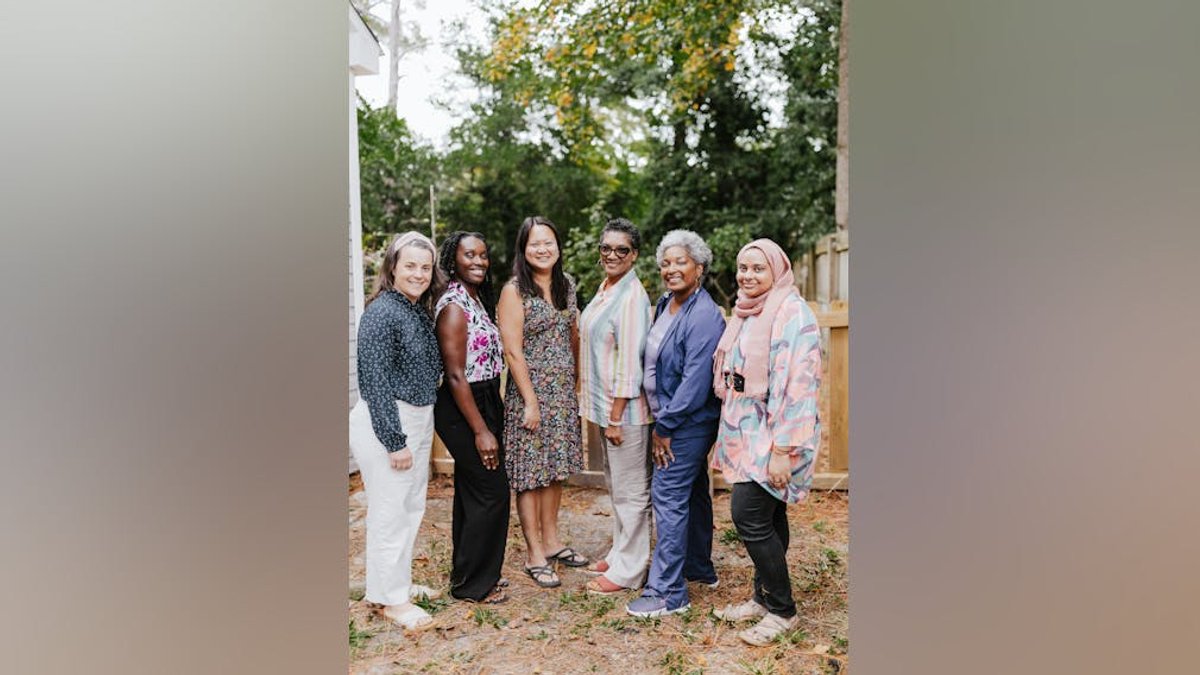
A $10 million randomized controlled trial in North Carolina examines whether pairing community doulas with real-time data alerts can shrink gaps in maternal health outcomes, especially for Black mothers, who experience higher rates of low birth weight, severe pregnancy complications, and infant mortality. The initiative, named ACURE4Moms, earned a spot among the 2026 Healthcare Innovation Innovator Awards and draws on earlier work that used data tools to reduce disparities in cancer treatment.
Four strategies to narrow the maternal health divide
The trial spans 39 prenatal clinics across North Carolina, split into four groups. One group receives standard care without extra support. A second group gets data alerts from the NC Health Information Exchange, which flags high-risk patients—such as those with uncontrolled hypertension or skipped prenatal visits. The third group partners with community doulas, who provide continuous support from pregnancy through postpartum, including advocacy, education, and assistance with social barriers like housing instability or domestic violence. The final group combines both interventions.
Dr. Rachel Peragallo Urrutia, a co-leader and associate professor at UNC’s Department of Obstetrics and Gynecology, explained the impetus for the study: “Across the United States, we have an epidemic of preventable maternal morbidity and mortality that seems to be increasing and that definitely disproportionately impacts certain populations, both in terms of maternal deaths and maternal severe complications after delivery, as well as infant deaths.
There is a huge disparity in low birth weight between families who identify as Black and families who identify as white. We thought that this shouldn’t exist and we wanted to work together with the community to come up with a way to prevent that problem, to reduce the disparity, and to improve health outcomes for everyone.”
Read Also: Micky Tripathi Leads AI Rollout at Mayo Clinic
The project builds on a prior effort called A Cure: Accountability for Cancer Care Through Undoing Racism and Equity, which used patient navigation and data tools to cut disparities in lung and breast cancer care. For maternal health, the team incorporated community doulas after research showed women matched with doulas early in pregnancy had lower rates of low birth weight.
Dr. Jennifer Tang, another co-leader, noted that disparities persist. “Low birth weight, unfortunately, just keeps getting worse for all women, but particularly for Black women, so we really can’t wait. We need to generate the evidence now,” she said.
Doulas address what clinics often miss
Community doulas, including those from Momma’s Village-Fayetteville, deliver care beyond medical services. Maya Jackson, founder and executive director of MAAME Inc. and doula lead for the western half of ACURE4Moms sites in North Carolina, described their role as “full-spectrum”—covering conception, pregnancy, sometimes loss, birth, and postpartum, and also providing extensive care for an extended time postpartum, which is often overlooked. “We do a lot of education. We do a birth preference that really helps our families prepare for any of the changes that may occur during labor. We help them with advocacy—how to do informed decision-making, how to pose questions to their provider. That way they have a clear understanding of what their care plan looks like.”
The first clinics started in the study in June 2023 and finished in June 2025. The last clinic in the study started in December 2024 and will finish in December 2026.
Read Also: Hospital at Home Model Ready for Wider Scale
However, long-term funding remains uncertain. While private insurers and Medicaid are exploring reimbursement options for doula services, coverage after the grant ends is still unclear. “We’ve worked extensively with payers to create reimbursement pathways,” Peragallo Urrutia said, “but the process is still unresolved.”
Data alerts that providers actually use
While doulas handle social and emotional needs, the study’s electronic maternal warning system targets clinical oversights. Built on the NC HealthConnex HIE, the platform sends near-real-time alerts to clinics when patients meet high-risk criteria, such as uncontrolled hypertension, missed visits, or eligibility for aspirin to prevent preeclampsia.
Early feedback indicates clinicians find the alerts helpful for tracking patient progress and preventing missed care, though sustainability remains a challenge due to resource constraints.
Dr. Tang reported positive early feedback from clinicians. “Providers said the alerts helped them track patients they might have otherwise missed,” she said. “It adds support when they’re already stretched thin.” Still, without grant funding, maintaining the data system will require policy shifts, such as embedding alerts in electronic health records or securing payment models to cover staff time.
Read Also: Peter Embí to Lead National Library of Medicine
“Right now, clinics aren’t committing to continue this after the study,” Peragallo Urrutia said. “They need proof of effectiveness, and funding to make it practical.”
Testing equity, but will it endure?
The study reflects a broader understanding in healthcare: reducing disparities demands addressing both clinical and social factors. By combining data tools with community support, ACURE4Moms tests whether this two-pronged approach can improve maternal outcomes. Early results suggest it might, but only if sustainability plans are in place.
For now, the project demonstrates how health information exchanges, doulas, and clinical teams can collaborate to address deep-rooted inequities. “To improve outcomes, community involvement must be central,” Jackson said. “This team understood that principle.”
The study’s methods will not vanish with the grant. If the data confirms the interventions work, advocates will push for Medicaid expansion, private insurance coverage for doulas, and HIE integrations to keep the system operational. For now, the priority is proving what functions, and ensuring it remains accessible beyond the research phase.